Business should be as open as a pizza
Rubricator
- Introduction
- Communication Channels and PR Strategies
- Theoretical Framework: a Two-Sided Model
- Analysis
- Conclusion
- Sources
1. Introduction
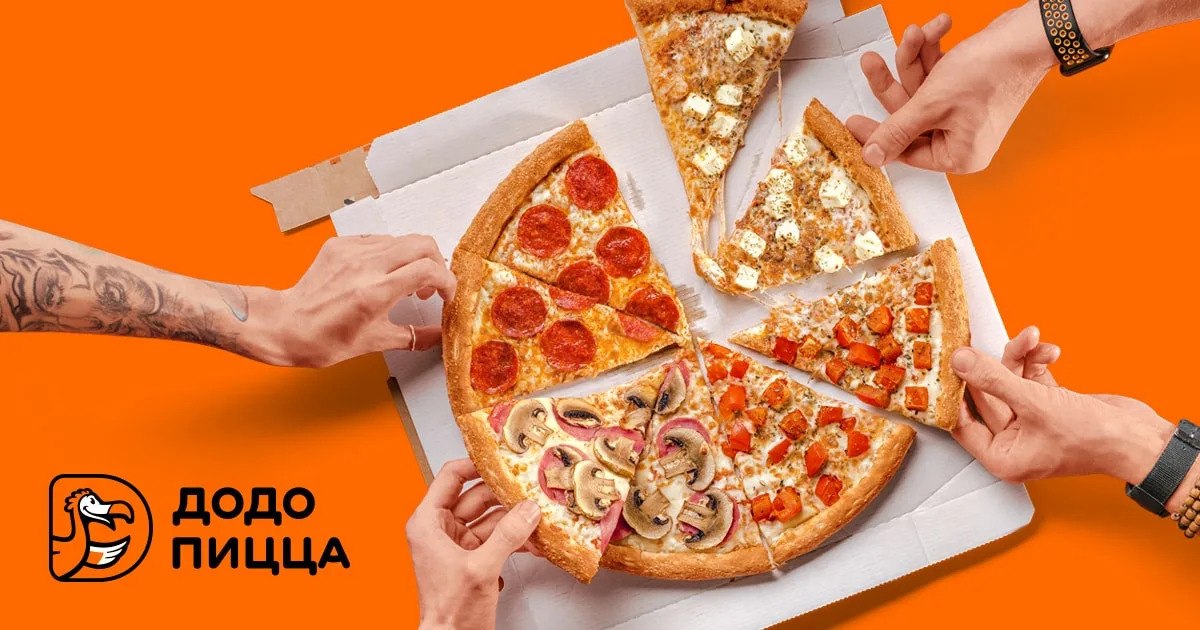
Advertising banner on the website
Dodo Pizza is a Russian chain founded by Fyodor Ovchinnikov in 2011 in Syktyvkar. By February 2026 it had grown into Dodo Brands, headquartered in Dubai, with 1,631 outlets in over 25 countries and a place among the world’s ten fastest-growing franchises.
What matters for the analysis is the positioning: Dodo calls itself «a technology company that makes pizza.» Everything runs on its own cloud system, Dodo IS, and on radical openness — kitchen cameras since 2012, public financial dashboards, an open rating for every outlet, and a founder who blogged the failures as well as the wins. Underneath the pizza, the brand sells technology, transparency, and trust.
The image rests on two codes: openness (nothing to hide) and «space» (a big mission, a sense of «we»). Together they form the paradox this analysis unpacks — an honest tech company with a big dream.
The audience spans several segments, addressed differently: millennials and Gen Z (speed, app, humour), families (quality, a reason to gather), office workers (convenience, pushes), franchisees and investors (open data, a transparent model), and staff (the «Dodo family»). To all of them the message is the same: an open tech company that makes good pizza honestly, and with you.
2. Communication Channels and PR Strategies
Dodo’s communication is omnichannel, sorted by control into owned, earned, and paid.
Dodo Pizza mobile app interface
The owned channels are the core. The website and app are the main point of contact — ordering, customisation, loyalty, instant rating — alongside Dodo IS and the public dashboards. Direct CRM marketing (email and push via Mindbox) alone drives about 19% of delivery revenue, so this «personal» channel is really a sales channel.
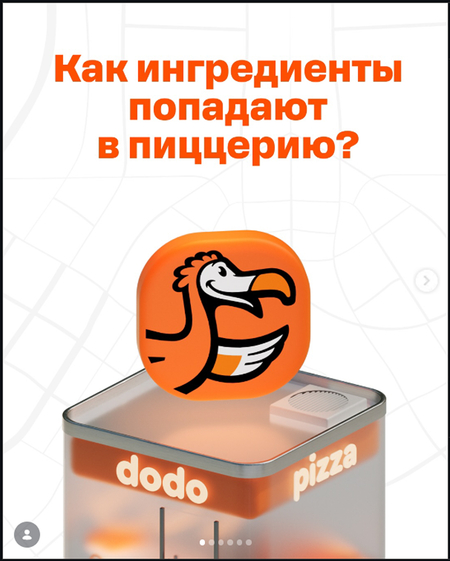
The earned channels carry the public life: social media (VK, Telegram, YouTube), reviews, press, the founder’s blog, and influencer work. The network publishes around 170 000 posts a year, so local marketers run their own communities while head office shares know-how, and the tone is deliberately human — posts from named employees, not a press office.
Pizza preparation process at Dodo Pizza
The paid and offline channels — local targeting, in-app promos, interiors, packaging, events, and above all the open kitchen — lean on reach and value rather than hard performance marketing. Openness itself also works as a channel: cameras, dashboards, ratings, and an honest blog all say «nothing to hide, ” doing three jobs at once — a rational argument (ELM), an affordance of transparency, and a claim to dialogue.
The PR strategy follows from this: Dodo talks about its own mistakes before critics can. When a courier was fired in 2026 for wrapping a freezing dog in a company blanket and the story hit the news, the founder apologised publicly — fast crisis communication that also exposed the gap between the image of openness and practice on the ground.
3. Theoretical Framework: a Two-Sided Model
ELM (Petty and Cacioppo) explains persuasion through two routes. On the central route, people weigh the substance — facts, quality, competence — and the belief sticks; on the peripheral route, they go on surface cues — tone, emotion, imagery, a sense of «we» — which is faster but less durable. Which route fires depends on the customer’s motivation and ability.
The Elaboration Likelihood Model (ELM) of persuasion
U&G (Katz, Blumler) covers the consumer side: people actively pick channels to meet needs — information, entertainment, social connection, status, convenience — and, through selective exposure, screen out ads that interrupt them. So a brand has to live where its audience already is and earn attention rather than buy interruption.
Affordances theory (Cabiddu, De Carlo and Piccoli) explains the environment: an affordance is an opportunity to act where a platform’s features meet a brand’s goals. Its key marker is coperception — the brand seeing itself and the platform together («we use X in order to…»), a sign of maturity.
Social media affordances and engagement types in the Dodo ecosystem
Together, affordances describe the environment, ELM the messages inside it, and U&G the motives that pull people in; dialogic and critical theory then test whether the result is real dialogue and what it leaves out.
4. Analysis
4.1. The brand’s side through ELM
Dodo Pizza mobile app interface
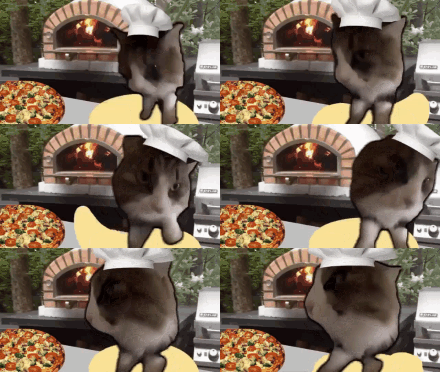
On the central route, Dodo’s persuasive material is everything that invites a rational check on quality: process transparency (cameras, open data), ingredients and standards, delivery times and guarantees, the open rating as proof, and the technology itself as a sign of competence. This carries most weight on big orders and with experienced customers.
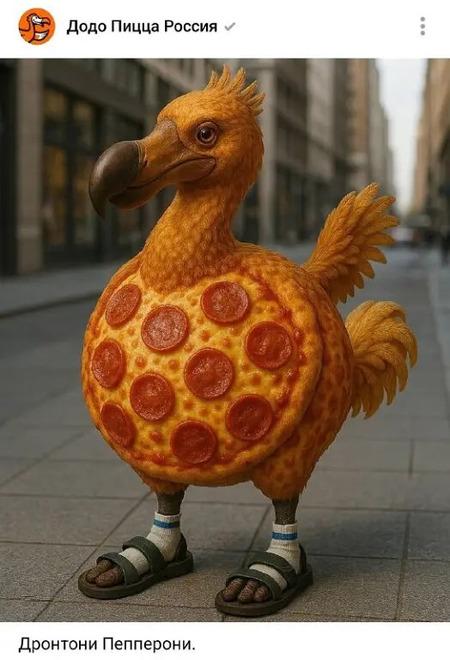
On the peripheral route, persuasion is about feel: the friendly «we’re like you» voice, the «Syktyvkar to the stars» story, the «Dodo family, ” and the whole visual world. None of it asks for analysis, which is why it works for first-timers and impulse orders. The key point is that Dodo does not pick a route — it shifts the mix to fit the moment (as Allison et al. find in crowdfunding): high stakes and an experienced customer lift the central route, low stakes and a new customer lift the peripheral.
4.2. The brand’s side through affordances